Podcast
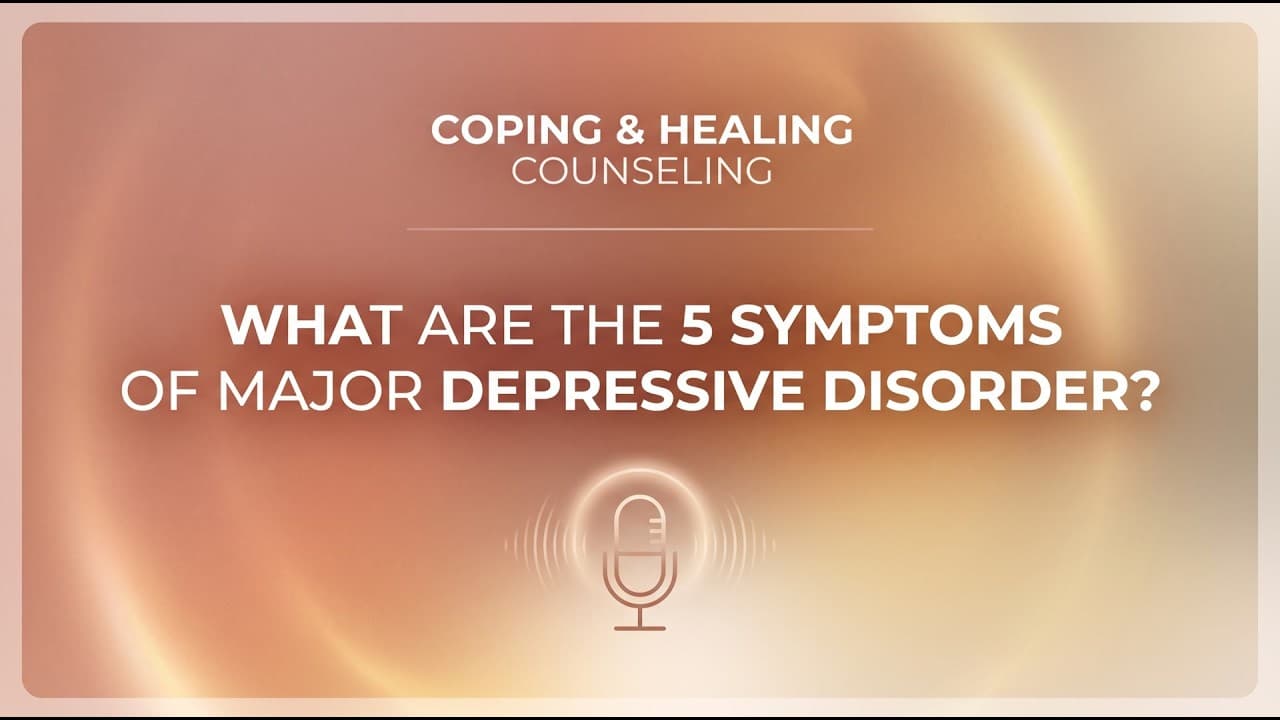
What are the DSM-5 criteria for major depressive disorder? — Full Episode
About this episode
What are the DSM-5 criteria for major depressive disorder?
In plain terms, it means at least five of nine symptoms that last two weeks or more, most of the day, nearly every day. One of those five has to be low mood or losing interest in things that used to matter to you.
We're sharing this becaus
Generated from Coping & Healing Counseling: Accessible Telehealth for Georgia
#CopingAndHealing #GeorgiaTherapy #Telehealth #MentalHealth #Podcast
Show transcript (3,298 words)
Transcript
You know, when we talk about medical diagnosis, there's um there's usually this expectation of just like mechanical precision,
right? Yeah.
Like if you break your arm, the X-ray reveals this jagged white line. The doctor points to it and well, the reality of the situation is undeniable. It's binary. I mean, you have a fractured ulna or you don't. The mechanism of failure is just entirely visible.
And I mean, human beings absolutely crave that visibility. We really want our ailments to be easily categorized into these neat, you know, observable boxes. It just makes the path to a solution feel a lot more linear.
Exactly. But the moment we cross into the territory of mental health, we completely lose the luxury of that X-ray machine. We enter this diagnostic landscape that is just incredibly complex.
Oh, absolutely.
And largely that's because our everyday language has completely blurred the lines. I mean, society throws around words like depressed constantly. Your team loses a playoff game, you're depressed, right? Your vacation gets rained out, you're depressed.
So, today we're stripping away that casual, you know, cultural misuse of the word. Welcome to the deep dive.
Glad to be here. Our mission today is to decode the actual clinical reality of depression for you. And we're utilizing materials from coping and healing counseling, which is a telealth therapy practice. And we're going to explore the mechanisms of the condition completely free of the medical jargon. But to do that, we need to look at the ultimate authority in psychiatry, the diagnostic and statistical manual of mental disorders or the DSM5. So to kick us off and set the baseline, what are the DSM5 criteria for major depressive disorder?
Uh in plain terms, it means at least five of nine symptoms that last two weeks or more most of the day nearly every day. One of those five has to be low mood or losing interest in things that used to matter to you. Okay, let's unpack this because you know we are doing this deep dive for you today because the cultural narrative often just writes off clinical depression as simply being tired or like stressed out from a demanding phase of life.
Yeah, people minimize it all the time,
right? But that exact clinical definition introduces a very specific really rigorous threshold and the very first boundary condition is time two straight weeks or more.
Yeah. So before we even evaluate the nature of the symptoms themselves, time serves as the foundational filter.
Okay,
the two weeks matter immensely because human neurology is well it's designed to fluctuate. We are supposed to experience acute stress responses. I mean if you get passed over for a promotion or you have a terrible falling out with a close friend, your brain registers a threat or a loss.
Cortisol spikes.
Exactly. Cortisol spikes. You feel terrible for a few days, but that acute situational reaction is fundamentally different from two straight weeks of feeling entirely flat, struggling to sleep, and just dragging yourself through every single routine task.
I want to isolate that distinction because I really think people often conflate an acute emotional injury with a chronic condition. It's well, a rough weekend is like passing bad weather, but two straight weeks is like a fundamental shift in the climate.
Oh, that's a perfect way to phrase it. And what's fascinating here is the psychological difference between those two states, you know, and how the brain actually attempts to adapt.
How so?
Well, passing bad weather is a situational reaction. Your brain processes a stressor. You experience grief and eventually the neurochemistry resets to its natural baseline. You bounce back,
right? The storm passes.
Exactly. But when we talk about a persistent twoweek mandate where the distress is active most of the day nearly every day we are looking at a system that has basically failed to reset. The brain is essentially stuck in a maladaptive loop. The baseline itself has shifted downward.
Wow. And the phrase most of the day nearly every day implies just a staggering amount of endurance. Like if someone wakes up on day eight and that heavy fog is still there and day nine and day 10, the sheer physiological exhaustion required just to exist becomes a compounding factor.
It creates a massive negative feedback loop. Yeah. And the timeline weeds out healthy emotional fluctuations which is just critical here. The DSM5 is not trying to pathize normal human sadness.
Right. Because grief is normal. Exactly. Grief is a necessary evolutionary process. The strict two-week rule exists specifically to separate a temporary functional emotional response from a clinical systemic condition that actually requires external intervention.
So moving from the timeline to the actual mechanics of the condition itself. Let's examine what is actually happening during those two weeks. Out of the nine possible symptoms, a person has to present with at least five.
Correct. And as you mentioned, the non-negotiable core pillar is that one of those five must be either a low mood or a complete loss of interest in things that used to bring joy.
Yeah. And the clinical term for that loss of interest is anodonia. And I mean, it is a profound neurological indicator. It's not just, you know, feeling a bit bored on a Sunday afternoon, right?
It is a structural failure in the brain's reward system. the dopamine pathways that normally fire when you engage in a beloved hobby. They simply stop responding.
So, it's the avid runner who leaves their shoes in the closet for a month and feels just zero internal drive to put them on. Or the passionate musician who looks at their guitar and feels absolutely nothing. It is a fundamental detachment from the sensation of joy.
Wow. And you know, we know that depression isn't just crying in a dark room. I mean, I think most people listening to this are well past that outdated stereotype,
thankfully. Yes.
But looking at the other symptoms on this list of nine, what really stands out is just how physical and visceral the manifestations are. We're talking about extreme irritability, intense foggy thinking, and a body that literally feels heavy alongside severe disruptions in sleep, appetite, energy, and concentration. The physical manifestations are really where so many individuals fail to recognize their own distress. Let's look at the physical heaviness which is clinically known as psychoot retardation.
Okay,
this happens because the central nervous system is literally downregulating physical movement. The brain is basically altering how it metabolizes energy and how signals travel to the muscles. Wait, so if I'm just incredibly irritable and my limbs feel like lead, but I'm not actually crying or feeling traditionally sad, that could still be on the checklist.
Yes, absolutely. It is a massive part of the checklist.
Wow. So, it's essentially like trying to run your brain's operating system on 1% battery while like 50 background apps are silently open, just draining the power. every single movement, even just walking up the stairs, feels like waiting through wet concrete because the system doesn't have the available energy to execute the command.
Yeah, that is a highly accurate way to visualize the mechanism at play. And then, you know, there's the intense irritability you mentioned,
right? The crankiness.
Exactly. When someone is clinically depressed, their prefrontal cortex, which is the part of the brain responsible for regulating emotions and maintaining patience, is deeply fatigued. Consequently, the amygdala, which is the brain's threat detection center, becomes hyperactive.
Oh, wow.
So, that's why a person might find themselves snapping at their partner over a mildly misplaced item or just feeling a surge of intense anger at a slowmoving driver.
That honestly reframes the entire concept of the condition. If a person's emotional regulation center is just offline and their nervous system is functioning on zero reserves, they aren't going to look traditionally sad. They're going to look angry or impossible to please or completely detached.
Right?
And because society doesn't widely understand the neurology behind this, people are incredibly harsh on themselves.
They blame themselves.
Yes. They internalize these biological symptoms as character flaws. They assume they just lack discipline because their energy is sapped or they believe they're fundamentally becoming a bitter toxic person because of their relentless irritability. When we actually unpack the underlying mechanisms, we give people the vocabulary to realize their body is exhibiting a systemic breakdown, not some moral failing. Which brings us to a really critical junction in this diagnostic process. We have the twoe timeline, and we have the combination of five systemic symptoms. But the materials we're analyzing today highlight that checking boxes on a symptom list is not sufficient for a diagnosis on its own.
No, it's not. The surrounding context is equally vital, particularly the requirement to rule out other medical explanations.
The context is the dividing line between a simple checklist and a true clinical diagnosis. First, obviously, these symptoms must be actively impairing the individual's life, creating significant friction in their workplace, their relationships, or just their ability to function.
Right?
But more importantly, the clinician has to ensure these symptoms aren't the direct biological result of a completely different medical issue. I mean the human endocrine and nervous systems are deeply interconnected networks,
right? The sources specifically mentioned ruling out thyroid problems or the physiological effects of a substance. And if we look at the mechanics of the thyroid, for instance, it makes perfect sense.
It does.
If you have an underactive thyroid gland, it stops producing enough thyroxine and that slows down your entire cellular metabolism.
Exactly. Hypothyroidism literally starves the brain and body of the energy it needs to function properly. The resulting symptoms, the sluggishness, the dense brain fog, the physical heaviness, and the severely low mood, they perfectly mimic a major depressive episode.
It's identical on the surface.
Totally identical. Furthermore, the introduction or withdrawal of certain substances, whether they're specific prescribed medications or recreational substances, can chemically alter the brain's neurotransmitter levels in a way that looks exactly like clinical depression.
It's like assuming your car's battery is dead because it won't start. But it turns out to be a faulty alternator. The symptoms look the same to a lay person, which is why you need a mechanic.
That is exactly right.
Yeah.
And because of these complexities, because these biological, chemical, and psychological factors are intricately layered, it is a strict rule. Only a licensed clinician can make the diagnosis.
Right?
I really want to emphasize that an internet article cannot diagnose you. A self- assessment quiz is only a starting point. And your peers cannot diagnose you. It requires a highly trained professional to untangle the physiological from the psychological.
I want to underscore that for everyone listening too. The symptom criteria we're discussing today, they are tools to help you recognize when your system is failing so you know when to seek help. But only a licensed clinician can make the diagnosis. You have to let the mechanic look under the hood.
Exactly. So assuming someone recognizes these patterns and consults a professional who actually confirms a diagnosis, I want to challenge the feasibility of the next steps. Looking at the researchbacked treatments outlined in the sources, cognitive behavioral therapy, behavioral activation, interpersonal therapy, these sound really rigorous.
They are. So, how do we expect someone whose limbs literally feel like lead, who is operating on that 1% battery we talked about, to actively execute complex psychological therapies?
Yeah, it's a profound paradox in mental health treatment really and it's exactly why these specific therapies are structured the way they are. Let's look at cognitive behavioral therapy or CBT.
Okay,
it is not just unstructured venting. It is a highly analytical process of identifying faulty cognitive algorithms. When someone is depressed, their brain defaults to catastrophic or highly negative thought loops. CBT provides a rigid framework to basically intercept those thoughts, examine the evidence for them, and consciously restructure the response.
It's basically like editing the code of a software program that just keeps crashing. You aren't just letting the program run and hoping it gets better. You're going into the back end, finding the specific line of code that causes the failure and rewriting it so the system can process data properly.
Yes, exactly that. And regarding the sheer exhaustion you mentioned earlier, that is where behavioral activation is particularly ingenious.
How does that work?
Well, it operates on an outside in mechanism. Depression drains motivation, right? So waiting until you feel like doing something means you will basically wait forever,
right? Behavioral activation entirely bypasses the need for motivation. The clinician helps the patient schedule very small, highly specific actions, taking a 10-minute walk maybe or calling a friend for 5 minutes. The patient executes the action despite feeling entirely unmotivated.
Oh, I see. So, the action essentially serves as a synthetic spark. You force the behavior and the behavior eventually forces the dopamine pathways to wake up and start firing again. The behavior jumpst starts the neurochemistry, breaking the negative feedback loop. Interpersonal therapy operates similarly, but focuses strictly on social dynamics, equipping the patient with tools to navigate relationships that might be exacerbating their distress.
Got it.
And of course, the clinical evaluation includes an assessment of whether biological intervention is necessary. A prescriber can talk with you about whether medication belongs in the treatment plan. And just to clarify the mechanics there without getting into specific drug classes or anything, medication isn't a magic cure that replaces the need for behavioral changes. It's a biological tool used to raise the patients baseline energy and cognitive clarity just enough so they can actually participate in the heavy lifting of therapy.
For many individuals, yeah, that's exactly the role it plays. It provides the initial neurochemical stability required for the psychological tools to take root. A licensed prescriber assesses the severity of the biological symptoms to determine if that intervention is warranted.
Well, here's where it gets really interesting, though. Understanding the science and the therapies is one thing, but historically, the logistics of accessing this care have been an absolute nightmare.
Oh, undeniably.
Finding a specialist who is actually taking new patients, driving across town in the middle of a workday, and navigating crazy out of network costs. Those are massive structural barriers, especially for someone already lacking energy. But the materials from coping and healing counseling or CHC, they provide a fascinating blueprint for how the modern medical field is actively solving this accessibility crisis.
Yeah, they are an excellent case study in dismantling those structural barriers. CHC operates a 100% HIPPA compliant teleaalth practice,
which is huge. It
it is. The clinical care is delivered over secure video, meaning the privacy standards are identical to a physical doctor's office. But the geographical limitations are entirely removed. They actually serve all 159 counties in Georgia.
The impact of that cannot be overstated. Whether you're living in downtown Atlanta or a deeply rural county with literally zero local mental health infrastructure, you are plugging into the exact same network of care.
Exactly.
And that network is robust. They utilize a culturally competent team of over 15 licensed therapists encompassing licensed clinical social workers, licensed professional counselors, and licensed marriage and family therapists.
And I want to touch on that because cultural competence is a vital mechanism for effective therapy. Clinical outcomes improve significantly when a patient can work with a clinician who natively understands their cultural background, systemic challenges, or specific lived experiences.
It makes sense. The therapeutic alliance just forms much faster. And their scope of practice is extremely broad. They treat teens from age 13 up, adults, couples, and families, addressing not just depression, but anxiety, trauma, PTSD, grief, and severe stress.
But if we're talking about removing barriers, we have to talk about the financial reality. Cost is the ultimate deterrent in healthcare. Looking at CHC's model, the financial accessibility is striking. For individuals carrying Medicaid, there is a 0 co-ay. It costs absolutely nothing out of pocket to access professional licensed clinical care.
That specific detail fundamentally changes the trajectory for vulnerable populations. It completely removes the friction of having to choose between mental health care and basic necessities.
Yeah. And for individuals with commercial insurance, they accept Etna, Sigma, Blue Cross Blue Shield, United Healthcare, and Humanana, the cost is highly regulated, generally ranging from just $10 to $40 a session.
They've essentially engineered a system that nullifies the two greatest hurdles to clinical intervention, geography and prohibitive costs.
Absolutely. So, if you're listening to this breakdown and recognizing your own baseline shift or maybe observing these mechanisms falling in someone you love, you can interface with them directly. You can call 404832102. Their digital hub is chc theapy.com and you can reach their intake team at supportcapy.com. They also host a free online depression test on their site. It isn't a diagnosis, but it is an excellent analytical tool to help you organize your symptoms before you speak to a clinician.
Yeah, it really helps patients articulate the specific nature of their distress, which significantly accelerates the intake process.
Right.
However, it is imperative to note the protocol for acute emergencies. If you are in immediate severe distress or experiencing thoughts of suicide, you bypass all standard assessments and intake forms. You call or text 988 immediately. The 988 lifeline connects you directly to crisis intervention resources 24/7.
That is the absolute rule. 988 is the immediate failsafe for an acute crisis. So to synthesize everything we have covered today for you. We took the cultural buzzword of depression and subjected it to clinical rigor. We broke down the DSM5 criteria establishing that true clinical depression requires a rigid two-week baseline shift.
Yep. We examined the biological mechanisms behind the symptoms, proving that anodonia, psychoot retardation, and intense irritability are physical manifestations of a system in distress, not personality flaws. And we establish why given the complex mimics like thyroid dysfunction, only a licensed clinician can make the diagnosis.
The goal of dissecting these mechanisms is really to replace judgment with clarity. And that leads me to a final thought for you to consider.
Let's hear it. If depression can manifest as intense irritability or brain fog rather than just visible sadness, how might that change the way we view the people in our lives? The next time a friend, co-orker, or family member is suddenly acting difficult or distant for weeks on end, we have to ask ourselves, are we quick to judge their character when we might actually be witnessing unrecognized distress?
Man, that reframes every interaction. It forces us to look past the surface behavior and consider the underlying operating system. The human mind is incredibly complex and the distress signals it sends rarely look the way we expect them to. Thank you for joining us on this deep dive. Keep questioning the mechanics of the world around you. Keep challenging assumptions and always stay curious.
Keep going
Watch, read, or see how online therapy with a Georgia-licensed therapist works.
- VideosShort videos from the MentalSpace Therapy clinical team.
- BlogPractical writing on anxiety, depression, relationships and therapy.
- Individual therapyOne-on-one online sessions with a Georgia-licensed therapist.
- Couples therapyBoth partners together in one secure video session.
- Teen therapyOnline therapy for teens ages 13 to 17.
- Insurance we acceptEvery plan we take, with benefits verified before your first session.